The origins of Hagi ware can be traced to the closing years of the sixteenth century, when Mōri Terumoto, lord of the domain, had the Korean potter Ri Shakkō of the Joseon dynasty and his younger brother, Ri Kei, establish a kiln in his territory. Rooted in the tradition of Korean tea bowls, Hagi ware developed a quiet, unpretentious warmth that came to be deeply admired by Japanese tea masters. It has long been celebrated in the traditional saying, “First Raku, second Hagi, third Karatsu.”
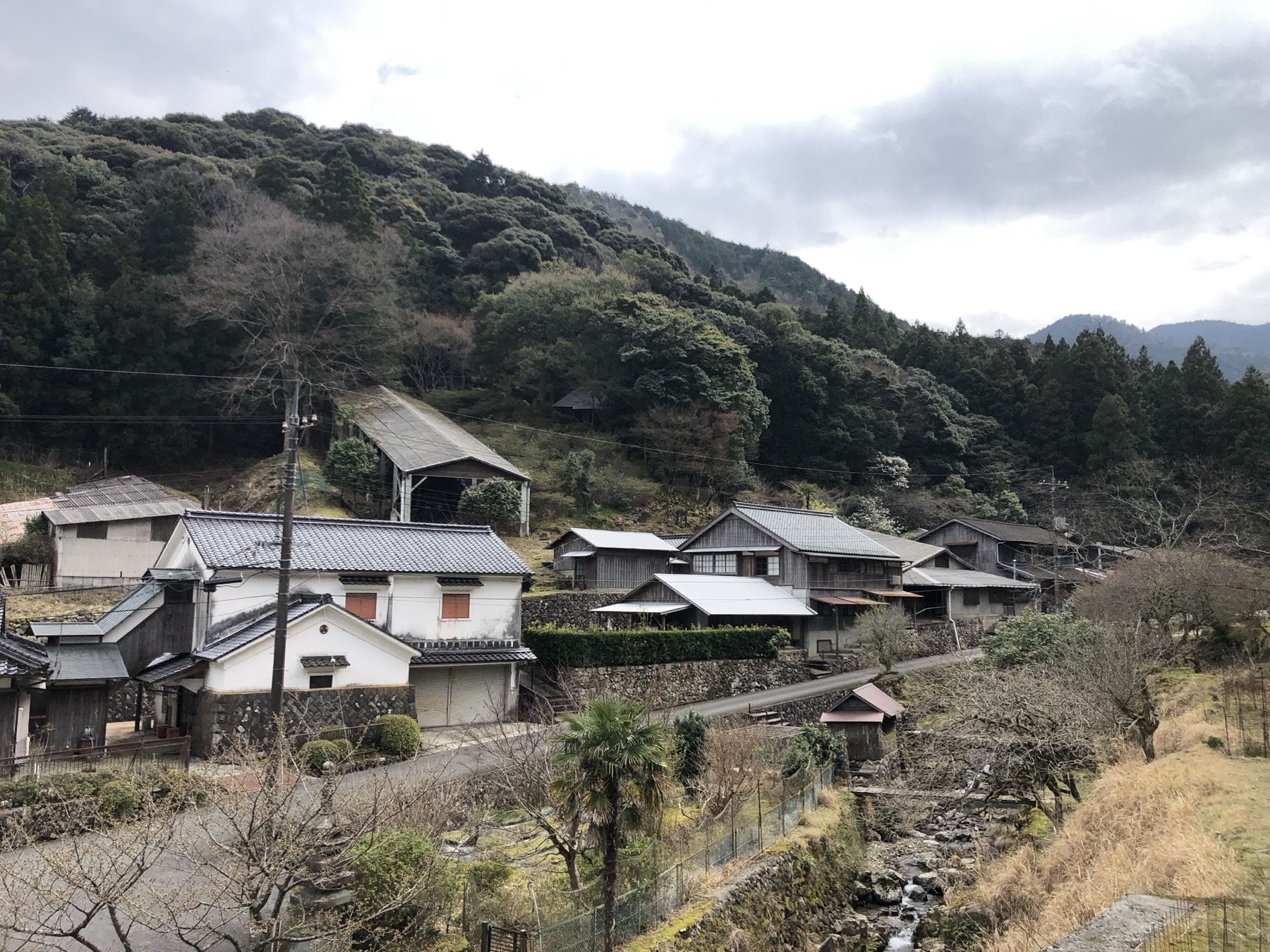
In 1657, descendants of Ri Shakkō, together with potters from his lineage, moved from the castle town of Hagi to Sōnose in Fukawa, where they established the Sōnose Yakimonosho, an official kiln of the Hagi domain. This marked the beginning of what came to be known as Fukawa Hagi.
The Sakakura family has continued the ceramic tradition as successors to Ri Shakkō, one of the founding potters of Hagi ware. For more than 370 years, successive generations have kept the kiln fires burning in this secluded valley community.
Among them, Sakakura Shinbe XII played a defining role in the modern history of Hagi ware. Following the Meiji Restoration, the abolition of the feudal domain system brought an end to official patronage, and Hagi ware entered one of the most difficult periods in its history. By deepening its relationship with the culture of chanoyu, the Japanese tea ceremony, Shinbe XII helped bring Hagi ware to wider recognition throughout Japan as a distinguished tradition of tea ceramics. For this achievement, he came to be regarded as a central figure in the revival of Hagi ware.
Subsequent generations continued this legacy. Both Sakakura Shinbe XIV and XV were designated holders of “Hagi Ware,” an Intangible Cultural Property of Yamaguchi Prefecture. Through them, and now through the succeeding generation, the Sakakura Shinbe Kiln has carried the tradition of Fukawa Hagi into the present day.
The kiln continues to work primarily in tea ceramics, preserving materials and methods that have long defined Hagi ware. These include traditional local clays such as Daidō clay, one of its principal raw materials, and firing in a climbing kiln fueled with pine wood.
Sakakura Shinbe XVI
Sakakura Shinbe XVI was born Sakakura Masahiro in 1983 in Nagato, Yamaguchi Prefecture, the eldest son of Sakakura Shinbe XV.
He studied sculpture at Tokyo University of the Arts and its Graduate School before completing the Kyoto Traditional Craft Artisans’ Training Program. In 2011, he returned to his hometown and began his practice in ceramics. In May 2024, he succeeded to the name Sakakura Shinbe XVI.
Alongside traditional Hagi clays such as Daidō clay, Shinbe XVI incorporates earth that he gathers himself from the surrounding landscape. From these materials he creates tea ceramics and sculptural works that reveal the particular textures and character of the clay itself.
His practice moves between two inheritances: the sculptural sensibility cultivated through his study of sculpture, and the centuries-old tradition of Fukawa Hagi, deeply rooted in its place and materials. By bringing these two perspectives into dialogue, he seeks to convey Hagi ware not as a relic of the past, but as a living craft—one that continues to take form in the present.
Sakakura Ikkei / Sakakura Shinbe XV
Sakakura Ikkei, formerly Sakakura Shinbe XV, was born in 1949 as the eldest son of Sakakura Shinbe XIV.
After graduating from the Department of Sculpture at Tokyo University of the Arts, he completed graduate studies in ceramics at the same university. In 1978, at the age of twenty-nine, he succeeded to the name Sakakura Shinbe XV.
For more than four decades, he pursued both the traditional techniques through which the distinctive qualities of Hagi clay are brought to life and a highly individual form of expression using inlaid decoration with colored clay. Through this sustained exploration, he broadened the expressive possibilities of Hagi ware while remaining firmly grounded in its tradition.
In 2013, he was designated a holder of “Hagi Ware,” an Intangible Cultural Property of Yamaguchi Prefecture.
In 2014, the Sagawa Art Museum presented Raku and Hagi: Shinbe’s Raku, Kichizaemon’s Hagi, a two-person exhibition bringing together Sakakura Shinbe XV and Raku Kichizaemon XV. For the exhibition, the two artists exchanged the clay and kilns of their respective traditions: Shinbe worked with Raku clay and kiln, while Kichizaemon worked with those of Hagi. The project attracted considerable attention as an exceptional experiment in the history of Japanese tea ceramics, creating a direct encounter between two of its most distinguished ceramic traditions.
In 2019, he was awarded the Order of the Rising Sun, Gold and Silver Rays.
In 2024, he passed the family succession to the sixteenth generation and adopted the artist name Ikkei. He continues his ceramic practice under this name.